A friend called me today because her angelic, soon-to-be two-year-old had bitten another child. “MY daughter? No… MY daughter doesn’t bite. We can’t be talking about the same sweet tiny person here…” Famous. Last. Words.
You see, she knew that I, too, have a little biter in this age range. For the safety of their children, my friends have all been warned. His nickname is “Micah Destroyer” because, while gleefully laughing, he can literally tear a room apart in a matter of moments. His favorite pastimes include putting non-food items in the microwave and hitting buttons until they begin to cook, as well as sneaking into the pantry and emptying the water cooler (while saying “DRINK!”). Sometimes he’ll combine the two activities by starting the microwave and then retreating to the pantry. One never knows what they will find when things have been “just a little too quiet.”
Here are some thoughts on toddlers’ tendency to bite – I hope they stir some ideas and offer encouragement to those parenting biters ;-)
Understanding the problem:
First, hurting others isn’t acceptable even if there’s a reason behind why they’re doing it. This is the time in their life when toddlers are testing boundaries and are learning what they can and cannot do. As parents, our goal is to teach them the right way to handle their frustration. Just keep reminding yourself: “They are learning and it’s going to take some time.”
While bearing this in mind, working to understand why a toddler bites (in addition to the fact they are probably cutting teeth!) and identifying the triggers helps parents to prevent the biting from occurring.
Toddlers aren’t capable of accurately expressing their frustration. Even if they are starting to talk, their vocabulary is still limited. I’ve noticed that Micah, and my other children when they were his age, would bite when someone did something to them they didn’t like. This could be taking away a toy, getting in their way when they were trying to do something, accidentally knocking them over, etc.
Another reason toddlers bite is because, despite their little size, they have found a way to fell giants – biting HURTS. So, they might just be playing around with “big kids” or even parents and bite just to say, “I’m strong!” It gives them a sense of power. It’s also a bit of a human sound machine experiment: “If I bite, then they scream.”
Last but not least, I have observed that toddlers bite when they feel like they aren’t getting enough attention or have outside factors influencing their behavior, and, no, I’m not referring to moon tides here.
Seven Tips For Parents of Biters:
1. Anticipation
Just like with adults, when toddlers are uncomfortable, it’s easier for them to get irritated. Translation: Please don’t take the child to their play date on an empty stomach. Doing so tempts them to misbehave. Hunger, thirst (not the vampirical kind, though you’d think it was related), feeling tired, having a soiled diaper, and being too hot… these are all things that irritate a child. Try to anticipate these needs and address them before they have to deal with them PLUS the issues they face while learning to get along with others.
2. Attention
Keep their tank full. I forget the context of this analogy, but the idea is that people have an emotional “tank” that needs to be kept full. My mother-in-law and I say to each other, “Their tank must be getting low” and what we mean is, “They need some love, comfort, and attention.”
When Tom is traveling, his absence seems to make the other problems I face larger than they really are. Children are no different.
If a child is going from babysitter to babysitter, or they are being dragged all around town to various mommy appointments before playing with their friends or siblings, if they haven’t seen daddy in a while, or if their grandparent just died… chances are they may be experiencing some emotional stress.
3. Prepare Ahead of Time
It’s important to be sure that you take a moment to calmly prepare them for the transition to playing with others. Sit down and spend time with them for a few minutes. Maybe you could show them a toy or read a book to them while they sit on your lap. You may also want to remind them of the rules. “Remember to use your words if you feel like biting.” “God says, ‘Be kind to one another.’ When you feel they are ready to play, say with a hug, “Let’s go play with the big kids now.” Reassure them they are loved and that you are involved in their life – biting and all.
4. Observation and Intervention
While they’re going through the biting phase, have them play in an area near you when they are with other children. This way, you can observe conflicts and will notice when they begin to get angry. Sometimes they give a warning before they bite. Micah says, “Ban ban BOW!” I have no idea what words he’s trying to say, but when he says this, I run over immediately and intervene. I know it’s his way of saying, “You’re making me mad and I intend to bite you!”
5. Communication
Teach them words to communicate their frustration. “May I please have my toy back?” or “Excuse me” if someone is in their way. By giving them words, they have more alternatives to expressing themselves besides screaming and hurting others. It’s okay to say, “I know that’s upsetting you/making you sad… let’s think of something else to do.” Even though they may not understand right away, it’s good to talk through the thought process. Just don’t expect them to get it the first time – or for several months.
The same thing goes for the big kids. Remind them that their baby brother or sister is learning from their behavior. “If your brother is bothering you, talk to him – don’t hit him or scream at him. That only teaches him to do the same. Instead, say, “Please don’t take that away from me” OR, if you see him getting ready to bite, say, “No Biting – use your words.” Give them an alternative. “If your little brother doesn’t listen to you, please come get me, and I will help you.”
6. Distraction
If they’re still upset (or, like in the case of sharing – sometimes the toys the big kids have aren’t good for the little guys), move them to a different area or give them something else to play with. They’re not quite at an age where you can rationalize with them. They want something and they can’t understand why they’re not allowed to have it – c’mon, toys with parts not intended for children under three are more interesting. “Hey, do you think we can find Curious George in your toy box?” “How about we go look out the window and see if we can see any cars?” “Want to sing ‘Itsy Bitsy Spider’ with mommy?”
If you think your toddler is biting for the sake of experimentation, give them something acceptable and interesting to chew. Popsicles, fruit pieces, and meat sticks often do the trick. Teach them by saying, “Our teeth are for eating food, not for biting your sister. Can you show me your pretty teeth? How about you bite into this apple instead?”
I used to give Thomas a toothbrush to chomp on when he would get nippy. “You have some sharp teeth there, honey – you’d better keep them clean. Brush ’em, Brush ’em, up and down!” He felt like a big boy and would quickly ditch thoughts of biting people.
7. Discipline and Restoration.
Yes, Micah does get disciplined for biting. However a parent chooses to discipline their child, it’s important that it is consistent (same thing each time, catching it immediately and not just when the parent feels like it), and that the child knows what they did wrong – to understand the rule: “No biting.”
After you have reminded them of the rule, discipline them.
If you can have a private moment with them in the course of discipline, pray with the child, hug them, and say, “Let’s ask God to forgive you.” “Dear God, please forgive me for biting. Help me to be kind to others and use my words instead of hurting them. In Jesus’ name, Amen.”
Tell them “God forgives you, but we need to ask ___ to forgive you, too.”
Take them to the child and say, “____, you have hurt ____ and made them cry (show them the bite mark if there is one). Please say, “I’m sorry for biting you, will you please forgive me?” Even if they aren’t yet able to repeat the words after you, you are setting an example for them when they can talk. “Now give ___ a hug.”
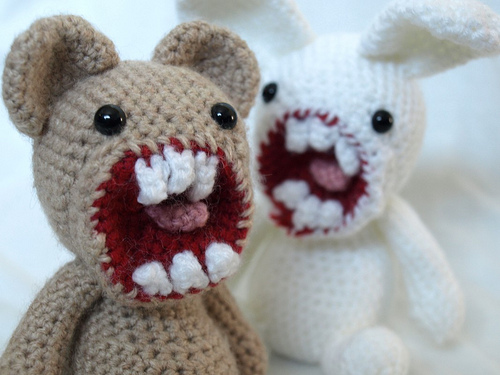
Photo credit: Mr. Foxxy via Flickr